


By Kayla Harshaw
As writers, we often fall for the lie that the best ideas are found in whimsical places and once-in-a-lifetime experiences. But I’ll let you in on a secret: it’s actually the opposite. Life’s simplest moments can force the creativity right out of us. Why? Because boredom is the greatest gift the universe can give a writer.

When we allow our minds to wander, we’re subconsciously connecting the outside world to our inner world. Most people call this daydreaming, but for writers, it’s much more than that. Our propensity for retreating into our minds during times of boredom can be one of our greatest tools. But what good is a tool if we don’t know how to use it? I’d like to share three ways writers can make dull moments a little more magical. More importantly, I’d like to share how we can translate those moments of magic into our writing.
1. Make the Most of Your Feelings
Most writers, myself included, experience emotions with the intensity of a thousand stepped-on Legos.

This can sometimes cause us to care a bit too much about, well, everything. For example, I was digging through a kitchen drawer and stumbled upon a bag of Christmas cookie cutters. Even though it was completely irrational, I felt sorry for the cookie cutters. They spend the entire year stuffed in a drawer, waiting for a single day in December when baking sugar cookies seems like a good idea. Then they’re forgotten for yet another long, lonely year. Maybe the cookie cutters are jealous of the forks and spoons that get used every day. Maybe the cookie cutters are planning an escape. Maybe their goal is to find a bakery where they’ll be appreciated. This is an example of taking an everyday situation and turning it into inspiration for a story.
2. Have a Home for Your Ideas
Let’s say you’ve had a groundbreaking idea for a story about cookie cutters, a story so grand that it makes Shakespeare’s finest work look like a grocery list. That’s great! Write it down immediately. I can’t tell you how many times I’ve told myself that I’ll remember an idea only to forget important details a few minutes later.

Our ideas need a home that is accessible at all times. Some writers carry around a notepad, but as a true Gen Z kid, I know that the memo pad on my phone is superior to the plebian pen and paper. I’m kidding, I’m kidding. Carry around a stone tablet for all I care as long as you never let another idea fade from your memory.
3. Now What?
With a pocketful of ideas and a few hours to spare, it’s time to write. You pull out your stone tablet and remember your idea about the cookie cutters. You open a word document, place your fingers on the keyboard, and…
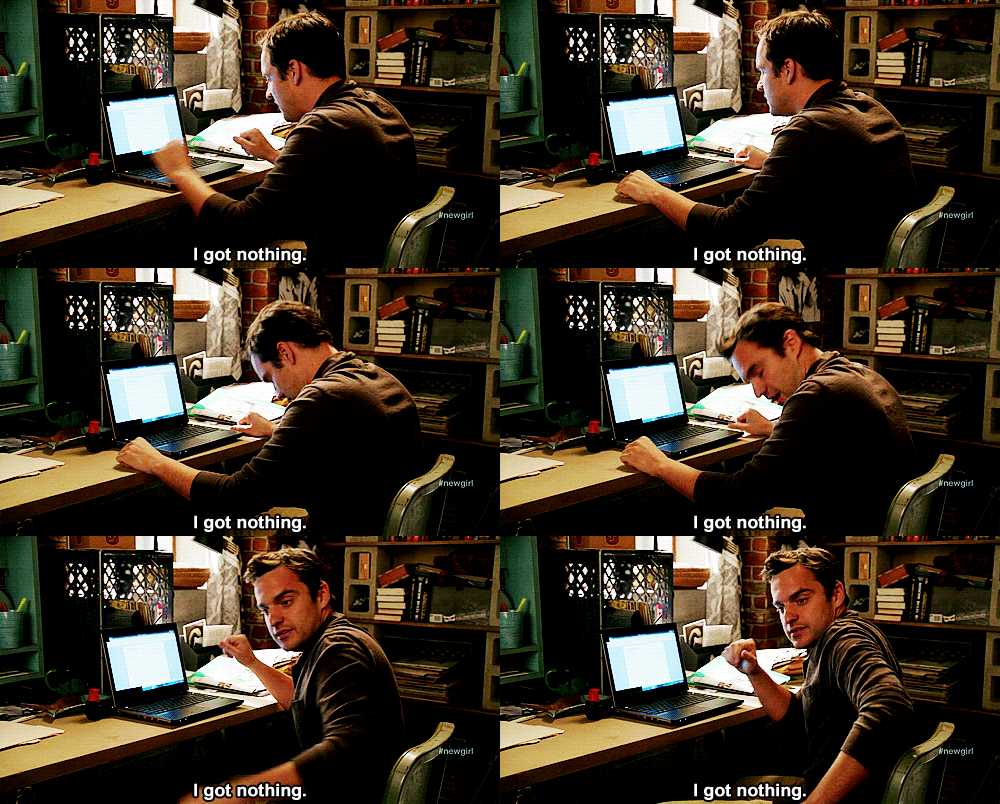
A few moments ago, you were so psyched about your story, but with nothing but a blank page to comfort you, the tale you’re itching to tell feels impossible. I too have fallen victim to blank page syndrome, and over time, I’ve learned that the only cure is to just start typing. It may be painful at first, but by the time you reach your second paragraph, you’ll have already forgotten the anguish of the empty page.
I’ll leave you with a question: When was a time you used creativity to make a boring moment a little more enjoyable? Bonus points if it also impacted your writing!
Until next time,
Kayla
 Student Journal for the Arts